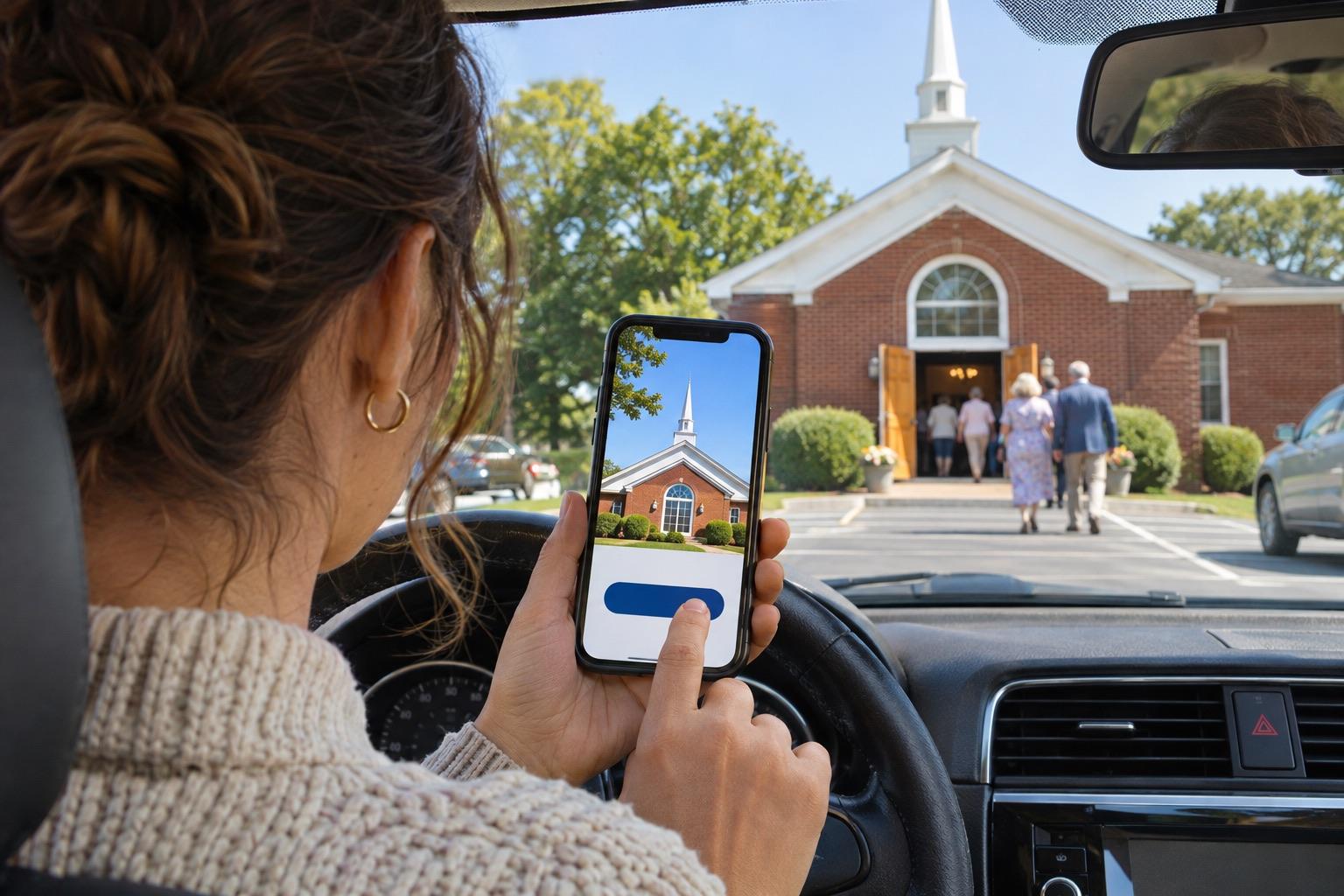
A pastor came to me with a problem I hadn't heard put quite this way before.
The church had a website, and it wasn't a bad one. It posted on social media every week. Google showed that people were finding the site: real visitors from real searches, month after month. By every number a church is told to watch, the church was doing its job online.
And nobody new was walking through the door on Sunday.
Most pastors I talk to have the opposite problem. Nobody can find them. This pastor had already solved that one, which made the second problem harder to explain. If people are looking at your church, why aren't they coming?
The traffic was never the problem
Look closely at what that pastor was describing. Strangers in town were searching for a church. They found this one. They clicked. They read. Then, somewhere between the website and the parking lot, they stopped.
That means the hard part was already done. Someone had worked up enough interest to look a church up. What they didn't have was enough reason, or enough nerve, to take the next step.
You can see the same gap in any church's numbers. Here is one month of my own church's Google listing:
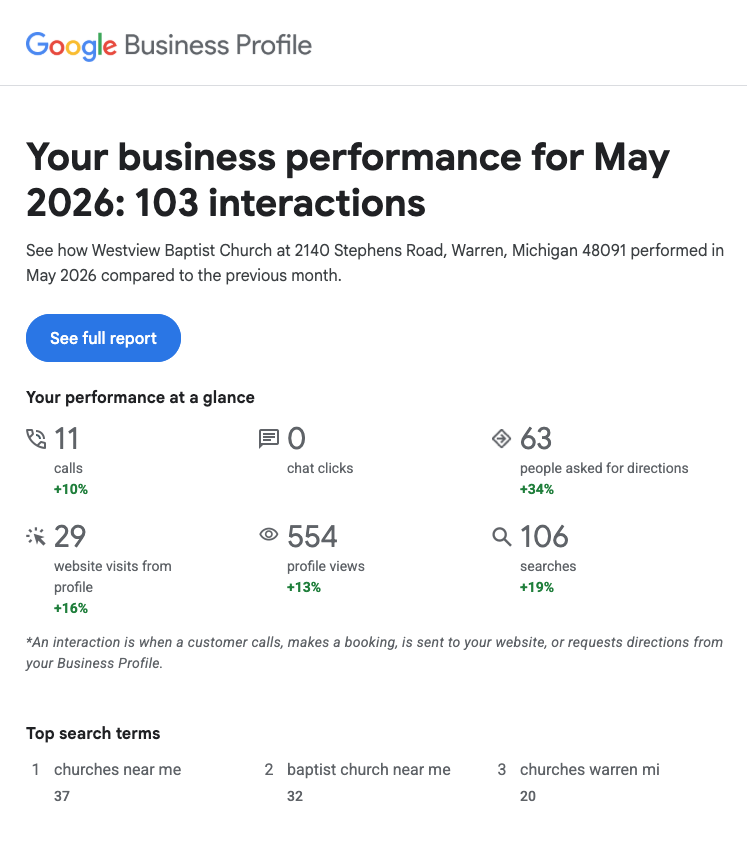
Views, visits, and searches are people looking. They are not people coming. The pastor in this story had plenty of looking. What the church needed was a way to turn a look into a conversation.
More traffic would not have fixed that. Another Facebook post would not have fixed that. Five hundred people a month quietly deciding "not this week" is five hundred people a month who already have your address.
What a first-time guest is actually weighing
When we build church websites, we tend to build them to answer two questions: when and where. Service at 10:30. Here's the address. Those answers matter, but they're not the questions keeping a visitor home.
Walking into a church for the first time is a lot like walking into a stranger's house. The person reading your website at eleven o'clock on a Thursday night is asking something closer to this:
- Will I be the only new person there?
- What do I wear? Where do I park? Which door do I go in?
- What do I do with my kids?
- Will somebody single me out, or ask me to stand up?
- Will anyone talk to me, or will I sit alone and leave alone?
- Is this a church for people like me?
If the website doesn't answer those, the visitor fills in the blanks, and anxious people fill blanks with the worst case. They don't write you to ask. They close the tab and tell themselves they'll try next week.
On most church websites, every move belongs to the visitor. They have to decide to come, find the building, pick a door, and walk in cold, alone, with no idea whether anyone is expecting them. We had asked a nervous stranger to do all of the brave parts.
So we changed three things.
1. We rebuilt the site to lower the anxiety
The redesign started from that list of questions, not from the church's org chart.
The goal of the new site is for a first-time guest to feel what the church's own members already feel when they walk in: I'm welcome here. That means showing the church's real people instead of stock photos, so a visitor can picture themselves in the room. It means walking through what a Sunday is actually like, plainly, before they ever arrive. It means answering the small, slightly embarrassing questions out loud, so nobody has to ask them.
None of this is clever design. It's the welcome a good greeter gives at the door, moved up to the place where people are actually meeting the church now, which is the website.
2. We gave them a way to say "I'm coming"
The biggest single change was a Plan a Visit form.
It looks like a small thing. It does something a service time never does: it turns an anonymous visit into an expected one.
When a family fills it out, the church knows their name before Sunday. Someone can watch for them in the parking lot, meet them at the door, show them where the kids go, and save them a seat. The visitor isn't walking into a stranger's house anymore. They're walking in as an invited guest, and somebody is waiting for them.
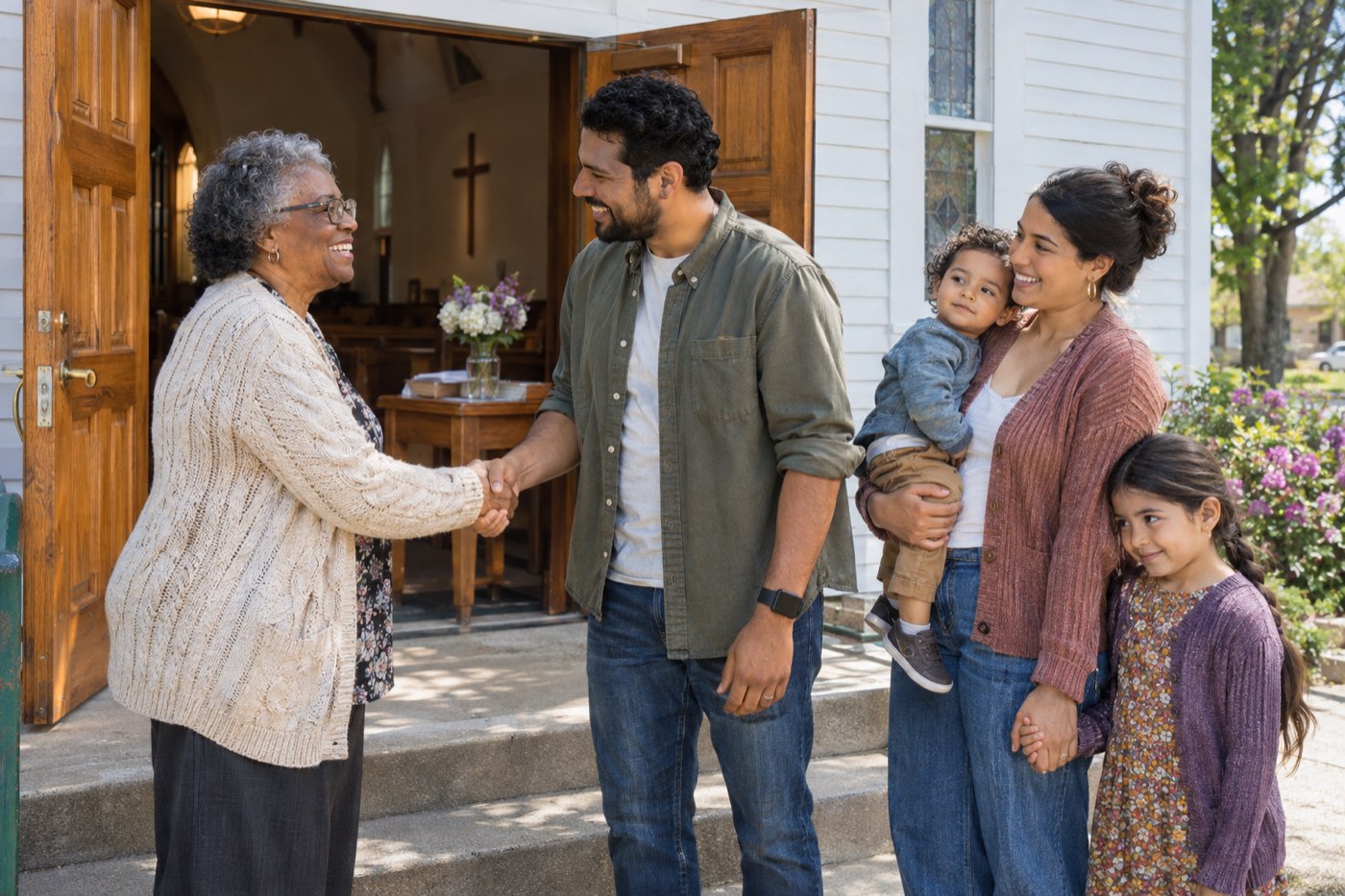
It also changes what the pastor can do. A name and a phone number on a Wednesday means there can be a short, kind message before Sunday: We're glad you're coming. Here's where to park. Ask me anything. The church has made contact before the visitor has had a chance to talk themselves out of it.
3. We had the church reach out first
The last change was the one I'd push hardest on every church: stop waiting for visitors to make the first move.
The new site actively invites people to ask the pastor a question. They don't have to call, and they don't have to send a "Contact Us" form into the void and wait three business days. They get a direct, low-pressure way to start a conversation with the pastor while their courage is still up.
That matters because most people who are almost ready to come have one question standing in the way. Is it all right if I haven't been to church in twenty years? Do you have something for my teenager? Can I just sit in the back? A real person answering that question kindly is often the whole difference between "someday" and "this Sunday."
I wrote more about this in The Quiet Power of Web Chat for Churches. The short version is that the church that speaks first does the hardest part for the visitor. They only have to answer.
What happened
People started talking to the pastor.
The same visitors who used to read the site and quietly leave began asking him questions and starting conversations. And once someone is talking to you, you can do what no website can: invite them yourself.
That was the real change. Before, the website was a brochure, and a stranger had to decide alone whether to come. Now it opens a conversation, and the pastor gets to do what pastors have always done best. He gets to know the person, answer what's worrying them, and personally ask them to come on Sunday.
A personal invitation from the pastor is worth more than any number of page views. The traffic had always been there. Now it led somewhere.
What to check on your own church's site
If your church has traffic and no new faces, don't start by asking how to get more visitors to the website. Start with what happens after they arrive.
Pull up your homepage on your phone and read it like a nervous stranger would:
Does it answer the anxious questions, or only the logistical ones? If a newcomer can find your service time but not what to wear, where the kids go, or whether anyone will talk to them, you've answered the easy half.
Can a visitor tell you they're coming? If the only options are "show up" or "contact us," you're asking for a cold walk-in. A Plan a Visit form gives them a way to arrive expected.
Does the church ever speak first? If every conversation depends on a stranger working up the nerve to start it, most of those conversations will never happen.
Then compare two numbers: how many people visited your website last month, and how many told you they were coming. The gap between them is the work.
Go out and compel them
In the parable of the great supper, the master doesn't send his servant to hang a sign on the door. He sends him out: "Go out into the highways and hedges, and compel them to come in, that my house may be filled" (Luke 14:23).
A website can't do the compelling for us. It can open the door, take away the fear, and put the guest's name in our hands before Sunday, so that we can go out and do the rest.
If your church is being found online but not visited, I'd be glad to look at your site with you. You can score your church website for free and see where a first-time guest is getting stuck.